Dolcetto
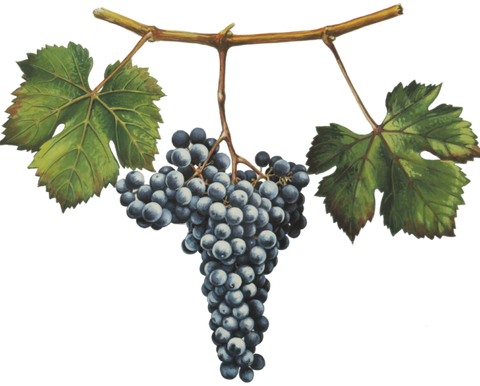
For centuries Dolcetto was the everyday wine of the Langhe. Farmers sold their Nebbiolo and drank Dolcetto themselves. It is an early-ripening red grape that gives supple, fruity wines with a typical slightly bitter touch in the finish.
Dolcetto at a glance
- Colour: red grape
- Origin: Piedmont
- Budburst: April
- Flowering: June
- Veraison: August
- Harvest: September, the first of the red grapes
- Pruning: Guyot
- Main wines: Dolcetto d'Alba, Diano d'Alba and Dogliani
Name and history
Dolcetto means "little sweet one", yet the wine is almost always dry. The name probably refers to the sweet taste of the ripe grapes or, according to another explanation, to the low hills (dossi) where it grows.
One of the oldest traces comes from Dogliani: in 1593 the town banned harvesting the dozzetti before the feast of Saint Matthew on 21 September. Dolcetto was also traded with Liguria in exchange for olive oil, salt and anchovies. In Liguria the grape is still called Ormeasco.
In the vineyard
Dolcetto ripens early and can therefore grow on cooler and higher sites where Nebbiolo would not ripen. Still, it is not an easy grape. It is prone to disease, and the right moment to harvest is crucial: too early gives a hard wine, too late a flabby one.
In the cellar Dolcetto also needs care. The skins are full of colour, so a short maceration is enough. Macerating too long gives too much bitter tannin.
The wines of Dolcetto
- Dolcetto d'Alba DOC: the best known, from a large area around Alba, including the Barolo villages.
- Diano d'Alba DOCG: Dolcetto from a single municipality, with 76 officially defined vineyards, the sörì. Read more on our page about Diano d'Alba.
- Dogliani DOCG: the Dolcetto from the hills around Dogliani, often fuller and with more ageing potential.
- Ovada DOCG: the Dolcetto from the Alto Monferrato, on the border with Liguria.
Taste and style
Dolcetto is deep ruby red with a purple rim. On the nose black cherries, blackberries, plums and liquorice, sometimes with a touch of almond. On the palate it is dry, supple and round, with mild acidity, soft tannins and that characteristic slightly bitter, almond-like finish. Drink it young, within a few years of the harvest.
Food with Dolcetto
Dolcetto is the wine for Piedmontese antipasti: vitello tonnato, salumi, carne cruda and peppers with bagna cauda. It also goes well with risotto, ravioli, pizza and veal.
Our Dolcetto wines
See all our Dolcetto wines, or discover the other grape varieties of Piedmont.

